
Stop Calling Proven Control Systems Obsolete

Petr Roupec
Stop Calling Proven Control Systems Obsolete
3:49
A Beyond Purdue perspective
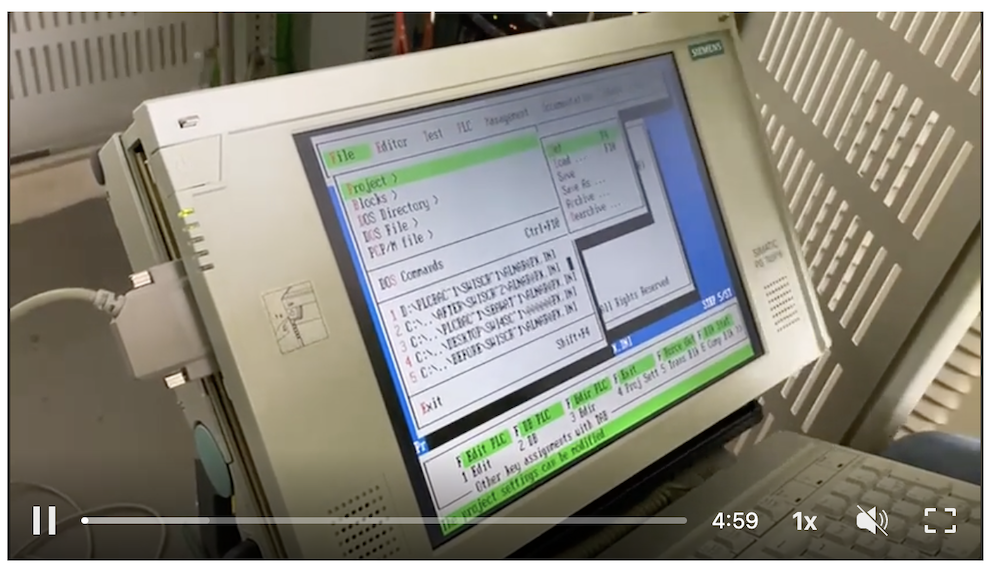
Beyond Purdue starts with a simple observation. Control systems do not suddenly lose value when they cross an arbitrary age line. Siemens S5, T2000, and similar platforms were engineered for long service, stable behavior, and clear separation of functions. They still run plants safely every day. The problem is not age. The problem is the belief that progress only comes from replacement.
The Purdue Model taught generations to think in layers and boundaries. That thinking still matters. What went wrong later was the habit of flattening everything into a new stack. In practice, most failures I see are not caused by old control logic. They are caused by broken continuity. Documentation disappears. Engineers change. Decisions get made without understanding what already works. No control system becomes unsafe just because it passed a birthday. What happens instead is that people stop understanding it.
This is exactly why we introduced OMLEX – Operation and Maintenance Life Extension years ago. OMLEX is not about adding megawatts. The real point is simpler and often ignored. Replacing a control system, even at the cost of millions, will not add a single megawatt either. OMLEX exists as an answer to unnecessary upgrades. It focuses on keeping proven systems running safely and predictably through proper maintenance, continuity, and understanding of what is already installed.
Recent projects show how this works in practice. We upgraded tariff metering and data paths without touching the core control logic. New measurement devices, independent data channels, and secure transfer mechanisms were added around the existing system. Control stayed where it belongs. Billing, reporting, and external access were separated. The plant gained better data quality and clearer responsibility. The original system stayed in place and did what it has always done well.
This is Beyond Purdue in real life. Do not flatten everything into one modern platform. Add depth instead. Add independent layers where they make sense. Add secure, one-way data paths. Add clear ownership of data flows. Keep the control system focused on control. Extend visibility and accountability without disturbing proven logic.
The missing piece is almost always people. On-the-job training is often the most valuable upgrade a plant can make. Not generic classroom sessions. Real work on real systems. Setting up a CP1430. Understanding how SINEC and NCM were meant to be used. Seeing why decisions taken thirty years ago still make technical sense today. Once engineers touch the system properly, fear disappears. The system becomes predictable again.
We have done this in many power stations. Short refreshment courses combined with site support. Step by step. No pressure to replace. No sales agenda. Just restoring competence. The result is usually immediate. Better decisions. Lower operational risk. Longer asset life.
Beyond Purdue is not nostalgia. OMLEX is not resistance to change. Both are about stewardship. A plant that has run reliably for decades contains embedded knowledge that cannot be recreated by migration alone. Replacing it without understanding it first is not modernization. It is amputation. Real modernization builds around proven systems, not over them.
So when someone tells you your control system is obsolete, ask a different question. Is the system failing, or did the knowledge fade away? If you are still running proven platforms and feel pressure to replace them because of age, there is another path. Add depth. Add separation. Add training. Keep control where it belongs. That is the OMLEX mindset. That is Beyond Purdue, as practiced at Bohemia Market.